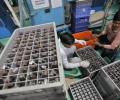
Escalating geopolitical tensions in West Asia are beginning to disrupt India's automotive supply chain, leading to rising commodity prices, logistics bottlenecks, material shortages, and pressure on consumer demand, with two-wheeler makers already raising prices.

Mahindra & Mahindra (M&M) is implementing a comprehensive, multi-layered strategy to fortify its supply chains against geopolitical volatility, logistical challenges, and regulatory risks, drawing lessons from recent global disruptions.
Delhi Police have dismantled a counterfeit auto parts operation, arresting three individuals for allegedly selling fake switches branded with a well-known auto component manufacturer's name. Raids in Karol Bagh led to the seizure of 10,650 counterfeit switches, believed to be imported and sold as genuine products.
Delhi Police have dismantled a fake auto parts racket operating in Karol Bagh, arresting two individuals and seizing counterfeit spare parts valued at Rs 25-30 lakh.

Indian benchmark stock indices, Sensex and Nifty, advanced for the second consecutive day, driven by softening crude oil prices and a positive trend in global markets. Despite some profit-taking in IT and metal shares, auto stocks outperformed, contributing to the overall gains.
Delhi Police have arrested a 33-year-old man for allegedly manufacturing and storing counterfeit automobile parts and packaging materials in a godown in west Delhi.
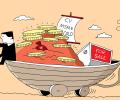
Several non-banking financial companies (NBFCs) are observing an increase in early-stage delinquencies within their micro, small and medium enterprises (MSME) loan portfolios, primarily driven by supply chain disruptions and escalating raw material costs exacerbated by the ongoing conflict in West Asia.

Companies are already diversifying sourcing, raising prices, and reworking operating models as the disruption drags on.

Japan's total trade with China rose by 30 per cent year-on-year to $301.9 billion last year, exceeding $300 billion.

Delhi Police have dismantled an interstate network involved in the illegal supply of psychotropic medicines, arresting four individuals and seizing a significant consignment of banned drugs.

Bajaj Auto reported a significant increase in its consolidated Q4FY26 performance, with profit after tax more than doubling to approximately 3,662 crore, a 103 per cent year-on-year rise, primarily driven by record volumes, an improved product mix, and the strategic consolidation of Bajaj Auto International Holdings AG (BAIHAG).

Bajaj Auto is set to launch new Pulsar motorcycles in the 125cc and 150-250cc segments in Q2 FY27, aiming to capitalise on the upcoming festival season surge. This move follows strong growth in the 150cc-plus segment, where refreshed Pulsar models already account for over 50 per cent of Bajaj's sales.

India's auto retail sector achieved record-breaking sales of 2,96,71,064 units in FY26, a 13.3% increase, primarily driven by the implementation of GST 2.0 which reduced the tax burden on mass-segment vehicles, according to the Federation of Automobile Dealers Associations (FADA).

Maruti Suzuki has discontinued its Ignis hatchback due to weak sales and a shift towards SUVs, while simultaneously facing supply chain issues for its popular S-Presso and WagonR models, leading to booking halts at some dealerships.

Leading carmakers Maruti Suzuki and Hyundai witnessed a double-digit drop in sales in October on account of the global semiconductor shortage impacting production. Kia India, Honda Cars and MG Motor also saw a fall in dispatches last month as compared with October 2020. However, companies like Tata Motors, Mahindra, Nissan and Skoda managed to post positive numbers last month despite the supply chain challenges.

'So far our production is not affected. But every day the situation prolongs, it does bring risks in terms of shipments getting delayed.'

India's leading passenger vehicle manufacturers are significantly increasing investments and factory capacities, alongside planning major product launches for FY27, driven by strong confidence in sustained domestic demand growth despite global geopolitical tensions and supply chain risks.

Suzuki Motorcycle India Ltd (SMIPL) has revised its domestic two-wheeler sales growth estimate for FY27 downwards from 7-8 per cent, citing rising commodity costs due to the ongoing West Asia conflict and its impact on consumer affordability.

With a million-odd electric vehicles (EVs) - two-wheelers, e-rickshaws, buses and passenger cars - expected to hit the road this calendar year, the shift from gasoline-powered vehicles has become irreversible. Now the question is whether the supply chain is ready for this shift. Key components - the high-powered lithium-ion battery and the cells which go with it, the electric motor, and the electronics powered by chips - account for nearly 60 per cent of the cost of an EV.

Indian stock market benchmarks Sensex and Nifty rebounded by over 1% on Monday, driven by value-buying in banking stocks after a three-day slump. Key gainers included UltraTech Cement, HDFC Bank, and Mahindra & Mahindra.
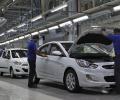
Domestic passenger vehicle dispatches in India rose 10.6% in February, driven by utility vehicles and two-wheelers, but the industry remains cautious due to geopolitical tensions.

American industry groups sought punitive tariffs on Indian goods at USTR hearings, while Indian officials defended the country's manufacturing growth as demand-led and WTO-compliant.

'When I look at India's relative valuations, these are by far the lowest I have seen in my 35-year career.' 'The relative 12-month trailing performance is among the weakest I have seen, and foreign investor positioning is at a 16-17 year low.'

Indian oil marketing companies are incurring significant losses, selling petrol at a Rs 14 per litre loss and diesel at Rs 18 per litre, as elevated global crude oil prices, exacerbated by the West Asia crisis, outpace capped retail fuel rates, according to rating agency Icra.

JSW MG Motor India will launch four new models this year, and is planning to invest between 3,000 crore-4,000 crore in the country over the next couple of years. The new models include a plug-in hybrid, an electric vehicle, the Majestor SUV and one additional model yet to be disclosed.

After a record-breaking year, India's automobile industry is entering 2026 on a relatively strong footing, with sales growth expected in the 6-8 per cent range. The outlook is underpinned by policy support, including GST rationalisation, easing monetary conditions, and income tax relief, which together are likely to improve affordability and sustain consumer demand across vehicle segments.

Prime Minister Narendra Modi announced that the India-UK Comprehensive Economic and Trade Agreement (CETA) will come into effect on July 15, 2026, anticipating a significant boost to bilateral trade and investment.

To address the supply crunch, CII has suggested leveraging the existing excess capacity in the Indian industry; rolling back import duty hike to look for alternative sources of imports; expanding credit to manufacturing units with quick loan sanctions, and one-time emergency waiver of non-performing asset regulations for three months.

West Asia conflict triggers sharp sell-off in Indian markets, with realty, banking and auto stocks leading losses amid energy shock fears.

HDFC Bank, India's largest private-sector lender, has revised its FY27 growth trajectory, stepping back from earlier guidance to align with a more measured 12 per cent year-on-year expansion, citing geopolitical uncertainties.

The cost of the war is being counted not in the corridors of power in Washington or Tehran, but in Firozabad's darkened furnace rooms, Howrah's idle casting sheds, and a barbershop in Kochi where the wait is suddenly, inexplicably, an hour long, notes Prem Panicker in his must read blog on the Iran War.

Hyundai Motor India on Wednesday said the company is not facing any production issues due to the shortage of rare earth magnets. Replying to a query in the company's earnings conference call, Hyundai Motor India head of investor relations K S Hariharan noted that the company is maintaining an adequate inventory of the rare earth magnets.

'In investing, poor sentiment is always a good vintage to build a portfolio.'
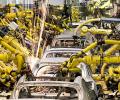
Passenger vehicle sales in India reached a record high of 4.7 million units in FY26, boosted by strong performances from major automakers and the implementation of GST 2.0.

If TVK MLAs and ministers are perceived as clean, or demonstrably cleaner than their predecessors, the credibility dividend will be enormous. The voter will feel rewarded, points out Ramesh Menon.

Bajaj Auto is planning a slow, calibrated push to take the Chetak, its electric scooter, to more than 100 countries on the strength of its distributor network and market-specific localisation rather than an aggressive global rollout, reports Sohini Das.

Speculation about rising competition from global majors has led to shares of major Indian automobile manufacturers such as Mahindra & Mahindra (M&M), Maruti Suzuki India, and Tata Motors taking a hit on the BSE.

The government has sharply reduced excise duty on petrol to 3 and diesel to zero, offering major relief to consumers. Here's how the price cut will impact fuel rates and inflation.
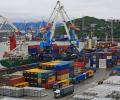
US and India will promptly implement this framework and work towards finalising the interim agreement with a view to concluding a mutually beneficial bilateral trade agreement.

The next many decades belong to India as the global economic powerhouse, and it will be essential to continue demonstrating policy stability, as the country aspires to be the world's manufacturing hub, Maruti Suzuki India MD and CEO Hisashi Takeuchi said on Friday.
